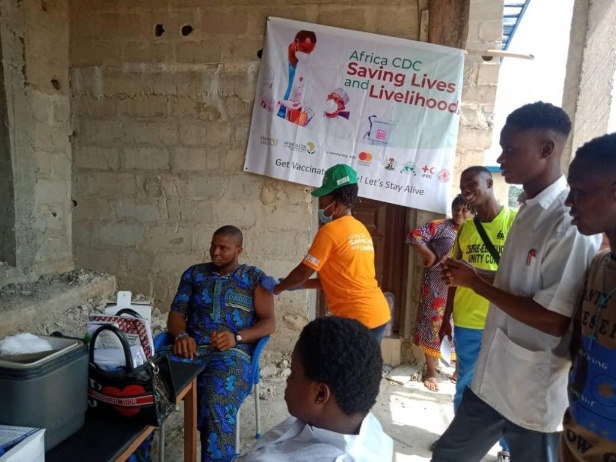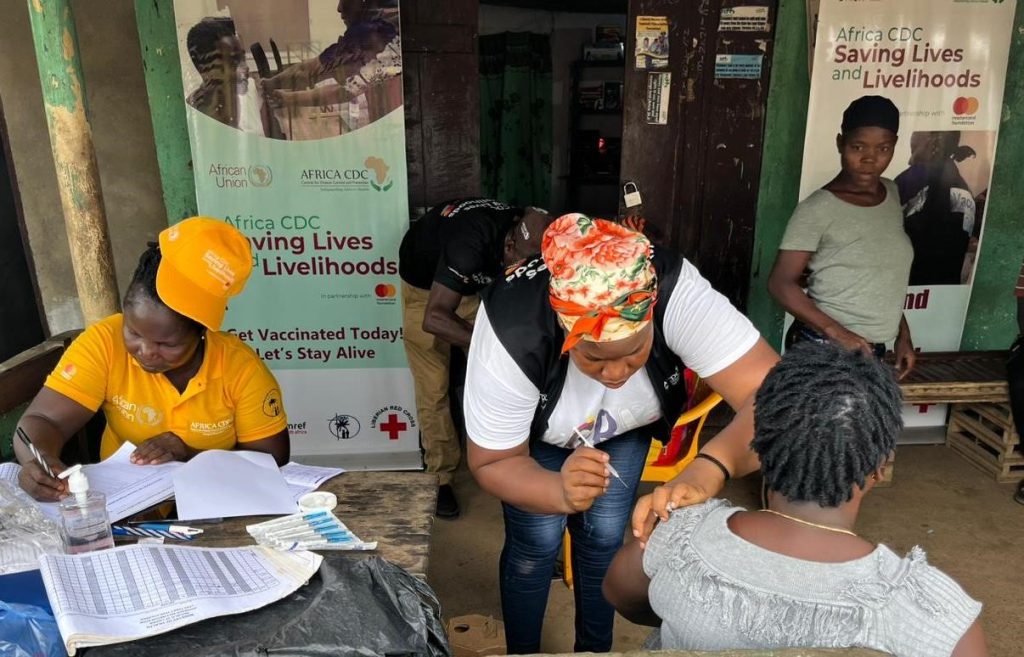
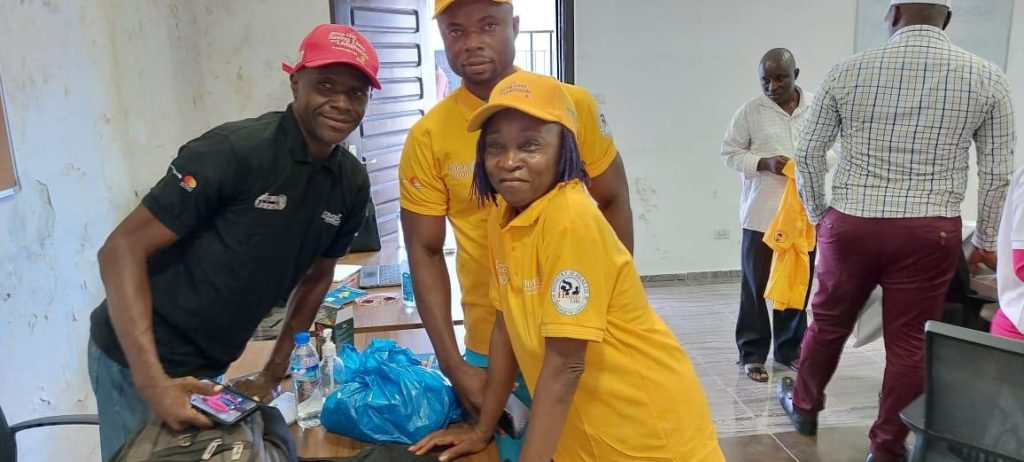
Between March 2023 and February 2024, the Christian Health Association of Liberia implemented Phase One of the Saving Lives and Livelihoods (SLL) Project — a continental initiative funded by the Mastercard Foundation and coordinated by Amref Health Africa in partnership with the Africa Centres for Disease Control and Prevention (Africa CDC). Deployed across four counties — Bomi, Grand Cape Mount, Gbarpolu, and Grand Gedeh — the project sought to accelerate COVID-19 vaccination coverage, strengthen community vaccination centres, and build a lasting immunisation infrastructure capable of serving Liberia’s most underserved populations long after the pandemic emergency phase.
The scale of mobilisation was significant. A three-tier training cascade reached 24 personnel at national supervision level, 60 at county level, and 404 at district level — equipping nearly 500 health workers and supervisors with the skills to plan, execute, and monitor vaccination campaigns in complex field conditions. Against a target population of 100,289, the programme vaccinated 69,601 people — achieving 63% coverage against a 90% target in a context defined by difficult terrain, community hesitancy, and the logistical challenges of delivering vaccines to communities far from functional health facilities. Branded materials, vaccine supplies, and cold chain equipment were distributed across all four counties, and community mobilisation activities addressed misinformation and built the local trust that vaccination programmes depend on.
Phase One laid indispensable groundwork. The training structures, county-level relationships, data systems, and community entry points established during this phase did not disappear when the project period ended — they became the foundation on which Phase Two was built. For CHAL, the SLL project represents one of the most complex logistics and community engagement operations it has ever executed, and the lessons from Phase One — what worked in Grand Gedeh, what stalled in Gbarpolu, and what the data revealed about the gap between target and achievement — shaped a smarter, more adaptive approach in the phase that followed.